Alberta's New Parks Plan Meets Pressure of Five Million Visitors in Kananaskis
Jessica Lee
Rocky Mountain Outlook
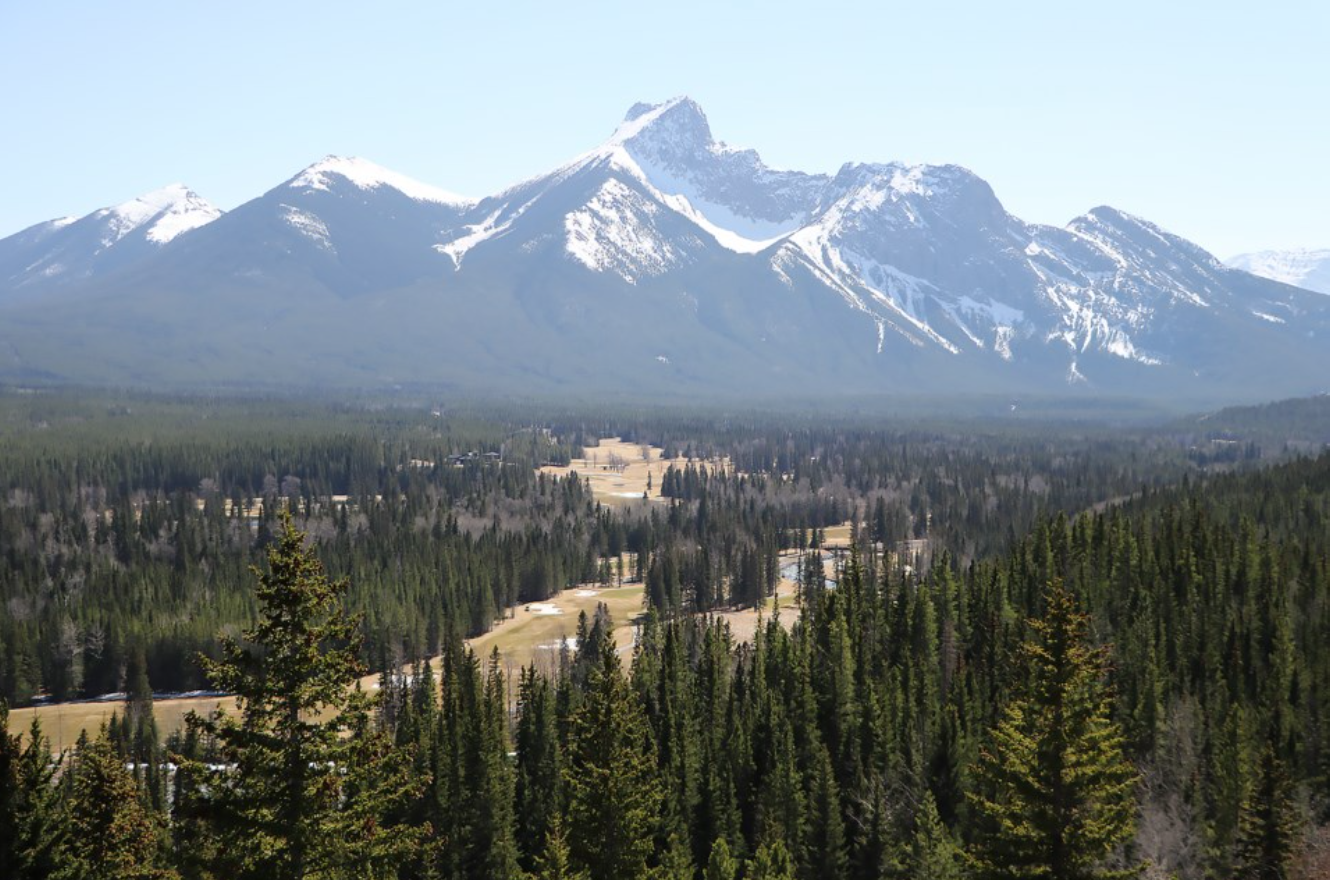
KANANASKIS – Kananaskis Country has about five million visitors a year, making it the busiest provincial parks region in Alberta and a key location for how the province’s new Plan for Parks will take shape on the ground.
Released on Jan. 28x, the plan sets out Alberta’s long-term direction for managing provincial parks as visitation continues to rise.
“The plan is very focused on people and human use, and that’s great because people use parks,” said Banff-Kananaskis MLA Sarah Elmeligi.
“But parks are also created – the majority of parks in our system are created – to protect ecological attributes of some kind.”
The plan identifies four goals for the provincial parks system, including managing visitation with a dual mandate of conservation and recreation, conserving natural and cultural values, expanding nature-based experiences, and strengthening long-term management.
While the plan applies province-wide, many of its challenges are already visible in Kananaskis.
Visitation in Kananaskis has grown faster than Alberta’s population. The previous Plan for Parks was released in 2009, when the provincial population was about 3.7 million.
Today, Alberta has roughly five million residents, while Kananaskis visitation has climbed to an estimated five million visits annually – up from early-2010s figures closer to one million.
That growth has driven congestion, parking shortages, trail degradation and increased pressure on infrastructure designed for far fewer users.
The plan commits to the development of a visitor use management framework to guide how Alberta Parks responds as visitation rises.
“A visitor use management framework is an essential tool in helping us to balance those dual mandates in a way that doesn’t compromise natural values,” said Robin Schmidt, Alberta Parks director of policy and planning.
Schmidt said the framework will not immediately impose tools such as visitor caps or timed access, but will establish criteria for when different management measures should be considered.
“We have to do the work of examining what visitation is and where the pressures exist,” she said. “What we’re imagining is a framework that identifies a suite of tools and the conditions and triggers for when those tools need to be considered.”
Schmidt said Kananaskis already illustrates why that work is necessary.
“We know that the capacity for Kananaskis to absorb new visitation is not infinite,” she said.
Katie Morrison, executive director with the Canadian Parks and Wilderness Society (CPAWS) Southern Alberta, said Kananaskis reflects many of the pressures the Plan for Parks is attempting to address.
“Kananaskis is emblematic of the challenge,” Morrison said. “It’s near a major center. It’s highly used, and it has a level of infrastructure that allows people to access these places.”
Morrison said the plan contains positive elements, including language recognizing conservation, low-impact recreation and the potential expansion of Alberta’s protected areas network with new parks.
“I was actually really impressed to see a commitment, or at least language, about expanding our protected areas network and creating new parks,” she said.
At the same time, Morrison said the plan leaves key questions unanswered about how conservation goals will be implemented as access and use continue to grow.
“There isn’t any clear path on how those things are actually going to happen,” she said. “But the plan also places a strong emphasis on increased access, use and infrastructure.”
Schmidt said Alberta Parks is investing in recreation infrastructure elsewhere in the province to help distribute demand. She pointed to trail development, campground expansion and facility upgrades at sites including
Pigeon Lake Provincial Park, Lesser Slave Lake Provincial Park, Dinosaur Provincial Park and along the David Thompson Highway corridor.
Alberta’s government says it is investing more than $236 million in recreation and access across provincial parks and Crown land, with a focus on trail planning and infrastructure intended to support conservation and reduce impacts on the landscape.
Within Kananaskis, Schmidt said trail rerouting away from core wildlife habitat and planning efforts such as the Canmore and Area Trails Master Plan show how the plan’s principles are already being applied.
She also pointed to upcoming work along the Smith-Dorrien Trail through Spray Valley Provincial Park, Peter Lougheed Provincial Park and near Bow Valley Wildland Provincial Park in Kananaskis. That work is mandated to focus on improving visitors’ experience and facilities like parking, while accounting for conservation pressures.
The plan also broadly commits to modernizing the Provincial Parks Act and its regulations to reflect emerging recreation trends and management needs.
“One of the key components of that is to really examine how we can better support compliance and enforcement in our parks through legislative tools,” Schmidt said.
She said public engagement during development of the plan emphasized the importance of education and enforcement, particularly in high-use areas like Kananaskis.
Elmeligi said she supports the idea of a visitor use management framework in principle, calling it one of the strongest elements of the plan.
“These are internationally recognized ways to manage parks so that people have high-quality recreation experiences and the park is still meeting its ecological requirements,” she said.
Her concern is whether the province has the staffing and capacity to implement those frameworks effectively.
“If they’re done well, they take time,” said Elmeligi, who is also a former Alberta Parks planner for Kananaskis.
“We don’t currently have an Alberta Parks system that has enough planners – literally, the capacity is not in the public service to do these well.”
She also questioned whether the plan places enough emphasis on environmental protection, noting conservation is not explicitly named in the plan’s vision statement.
“Environmental protection isn’t even in the vision for the Plan for Parks,” Elmeligi said. “I find some of the language around the environmental stuff is a little wishy-washy and non-committal.”
Morrison said questions about implementation extend beyond provincial parks to public lands, particularly in regions like Kananaskis that include both parks and Crown land governed under separate policy frameworks.
Those concerns are reflected in the province’s Crown Land Recreation and Conservation Strategy, released the same day as the Plan for Parks, which applies to public land outside the provincial parks system.
“Visitor use management is absolutely essential in all of these areas,” Morrison said. “Some of that might be how many people can go to certain areas at certain times. Some of that might be focusing on lower-impact activities.”
The Crown land strategy emphasizes expanding recreation opportunities and supporting tourism development, while also committing to environmental protection and stewardship.
The challenge, Morrison said, is how competing objectives are prioritized when they come into conflict.
“We can say all these great things in the Plan for Parks,” she said, “but unless we’re seeing how that’s going to be implemented – or not – in the case of Fortress, it’s hard to say this is a step forward.”
She pointed to the proposed Fortress Mountain redevelopment in Kananaskis – made possible by the province’s new All Season Resorts Act – as an example of the tension between policy goals and on-the-ground decisions.
“That is more commercial development. It’s more activities, more intensive activities, year-round,” Morrison said. “It isn’t considering the wildlife values, the water values, or even the character of Kananaskis as a nature-forward place.”
Morrison also said the Plan for Parks falls short in outlining how Indigenous leadership will be incorporated beyond consultation.
“There isn’t a real focus on co-management or Indigenous-led conservation,” she said. “That’s important from a reconciliation lens, but also as a really important conservation tool moving forward.”
Kananaskis is uniquely positioned to influence how Alberta, and the rest of the world, manages parks and public land going forward, Elmeligi said.
“Kananaskis Country is internationally renowned for being really visionary as this multi-use landscape,” she said. “What we do in Kananaskis, people are really paying attention to.”
The Plan for Parks outlines a phased implementation approach, with actions prioritized over three- to five-year timeframes and progress reported through annual business plans and budget cycles.
Schmidt said the document does not prescribe actions for individual parks, including Kananaskis, but is intended to guide day-to-day decision-making across the system.
“The plan ultimately is a piece of paper, right?” she said. “And implementation is how we breathe life into it.”