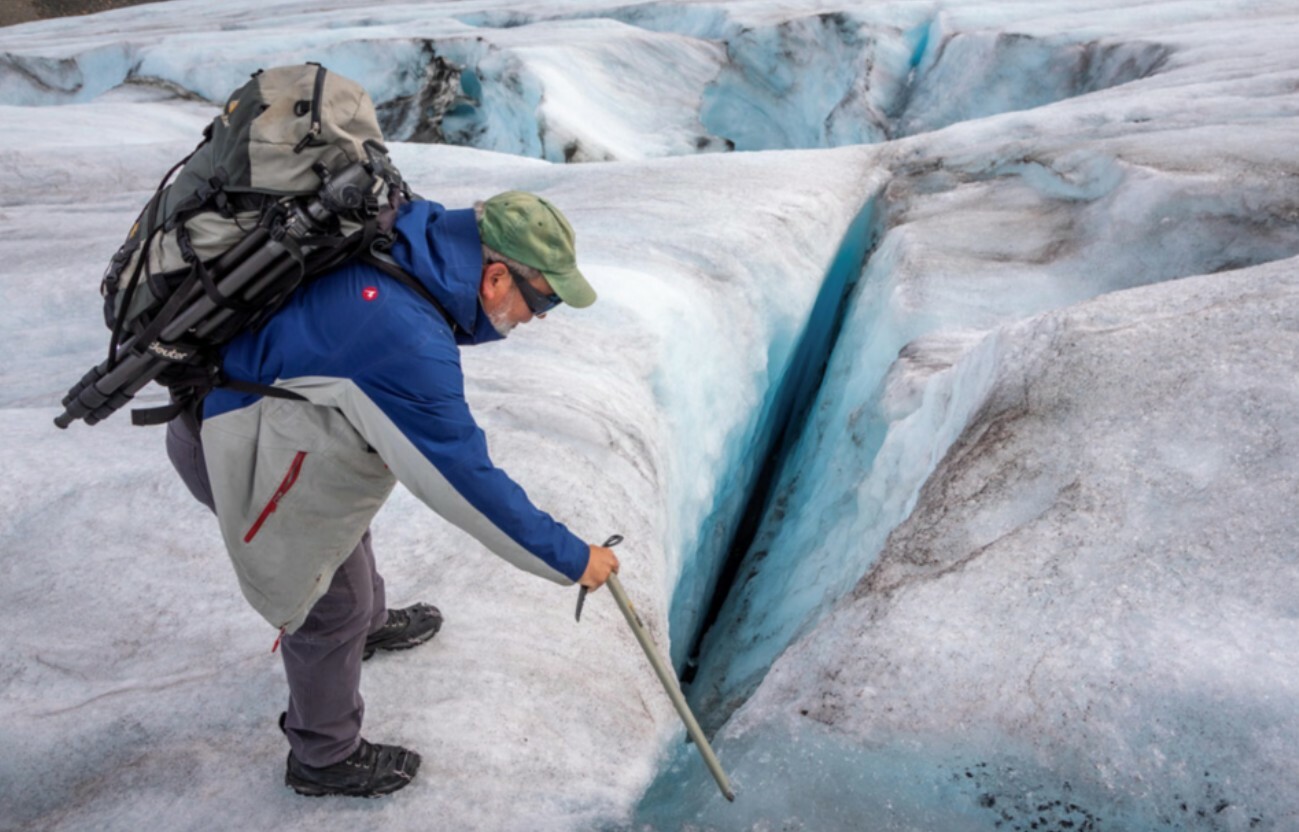
 Peyto Glacier in Banff National Park "May Not Last The Decade"
BANFF – Peyto Glacier in Banff National Park continues to melt at an alarming rate and may be gone in 10 years.
John Pomeroy, one of the world’s leading snow and ice hydrologists, said there has been about 450 meters of glacier toe retreat since 2019.
“When you take a look at the changes that have been occurring in Peyto Glacier, they’re dramatic,” he said Jan. 21 during the launch of the United Nations International Year of Glaciers’ Preservation.
“We’ve seen literally the disintegration of Peyto Glacier, a big response to the heat dome in 2021, but also to the exceptional heat and snow drought in 2023.”
Pomeroy said the five-year vertical ice loss on Peyto Glacier exceeds 50 meters in some parts of the glacier, which is a decline in the surface.
“Some of that is due to collapse of an ice cave, but ablation is resulting in about 35 meters of primarily melt over the lower part of the ice,” said the University of Saskatchewan professor.
“The result is, what we’re getting is a very truncated glacier that may not last the decade.”
Pomeroy made his comments via Zoom from his base at the University of Saskatchewan’s Coldwater Laboratory in Canmore for the official launch of the International Year of Glaciers’ Preservation in Geneva, Switzerland. He is a co-chair of the UN’s advisory board facilitating discussions and activities.
He said the International Year of Glaciers’ Preservation provides a mechanism to kickstart both renewed efforts to reduce greenhouse gas emissions and increase science and adaptation to prepare for a warmer, less icy world.
“There is still time to turn this around,” he said in his opening remarks. “Let history record that 2025 was the tipping point, where humanity changed course, and eventually saved the glaciers, ourselves and our planet.”
Pomeroy explains that mountain glaciers have provided an ecosystem service by storing “water” over seasons, years and decades and releasing this meltwater during the hottest, driest periods, and as glaciers decline “we are losing this ecosystem service.”
He said the best way to protect glaciers is to increase snowfall in spring and summer, and this needs a cooler climate.
“We need to limit greenhouse gas emissions from fossil fuel burning – this is the only effective way to preserve glaciers.”
For more on this devasting news, please select.